Ontdek ons laatste nieuws
Embedding GDPR in the secure development lifecycle (SDLC)
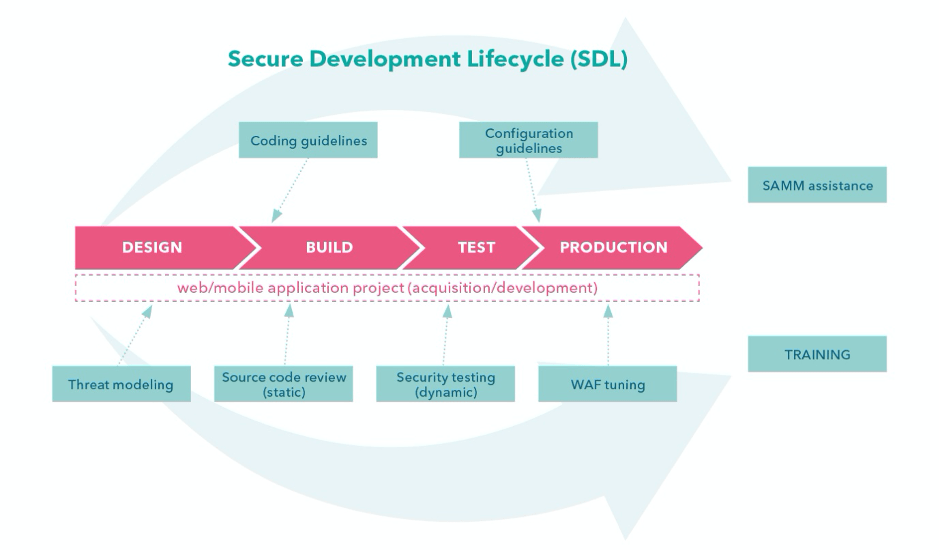 Did you know that the GDPR and SDLC re-inforce each other and that the GDPR can be used as the ideal business case to start with SDLC?
I don’t need to tell you that the secure development lifecycle (SDLC) method is thé go to methodology when planning for, designing, building, testing and delivering information systems. But if you play it smart, you can improve your SDLC by including GDPR activities and use SDLC artifacts to demonstrate compliance with GDPR.
A lot of articles in the GDPR specifically refer to security. Article 25 for instance, on privacy by design & default, article 32 on Security of Processing and article 35 on DPIA’s all specifically mention the security levels and assessments that should be considered. The most efficient way to comply with these GDPR security requirements when developing (new) applications, is by integrating them into your Secure Development Lifecycle.
You can find more information on the OWASP Software Assurance Maturity Model (SAMM) and how it can be integrated into any existing SDLC here. For now, it suffices if you know that OpenSAMM is defined in different levels.
- At the highest level it is divided into four tasks or concerns to consider while developing or using software. They align well with a typical organisational structure, and this is how software security typically ties into an organisation.
- At a lower level, several security practices are defined that should be considered for improving software security.
- At the lowest level, every security practice consists of a set of activities, ordered in maturity levels or objectives.