Picture this: Your team has a big launch coming up, but you’re worried that hidden security issues might derail everything. You know that threat modeling is the key to catching these gaps early, but where do you start? How can you quickly pinpoint potential vulnerabilities and reduce exposure without drowning in complexity?
The answer lies in using risk patterns—predefined sets of risk scenarios and mitigations that help you focus on what really matters. By understanding the types of attackers that might target your systems, how they’ll exploit them, and what controls you already have in place, you’ll spend less time guessing and more time securing. Risk patterns guide you through identifying critical trust boundaries, known attack methods, and the right countermeasures to implement.
Ready to discover how risk patterns transform your threat modeling process? Let’s break down what they are, how they work, why they’re effective, and how you can start using them in your own system designs.
Understanding Risk Patterns and Their Core Value
Risk patterns are like a organization specific shortcut for threat modeling. Instead of starting from scratch each time, you use tried-and-true examples of risk scenarios that fit your technology stack, compliance needs, and organizational priorities.
Why They Matter:
- Clarity: Risk patterns help you quickly identify where exposure is likely.
- Focus: They let you home in on technical and business risks that truly matter.
- Efficiency: Having a reference point means less time spent reinventing the wheel.
Once you understand risk patterns, the next step is to see how they slot into an established framework for threat modeling.
Integrating Risk Patterns Into the DICE Framework
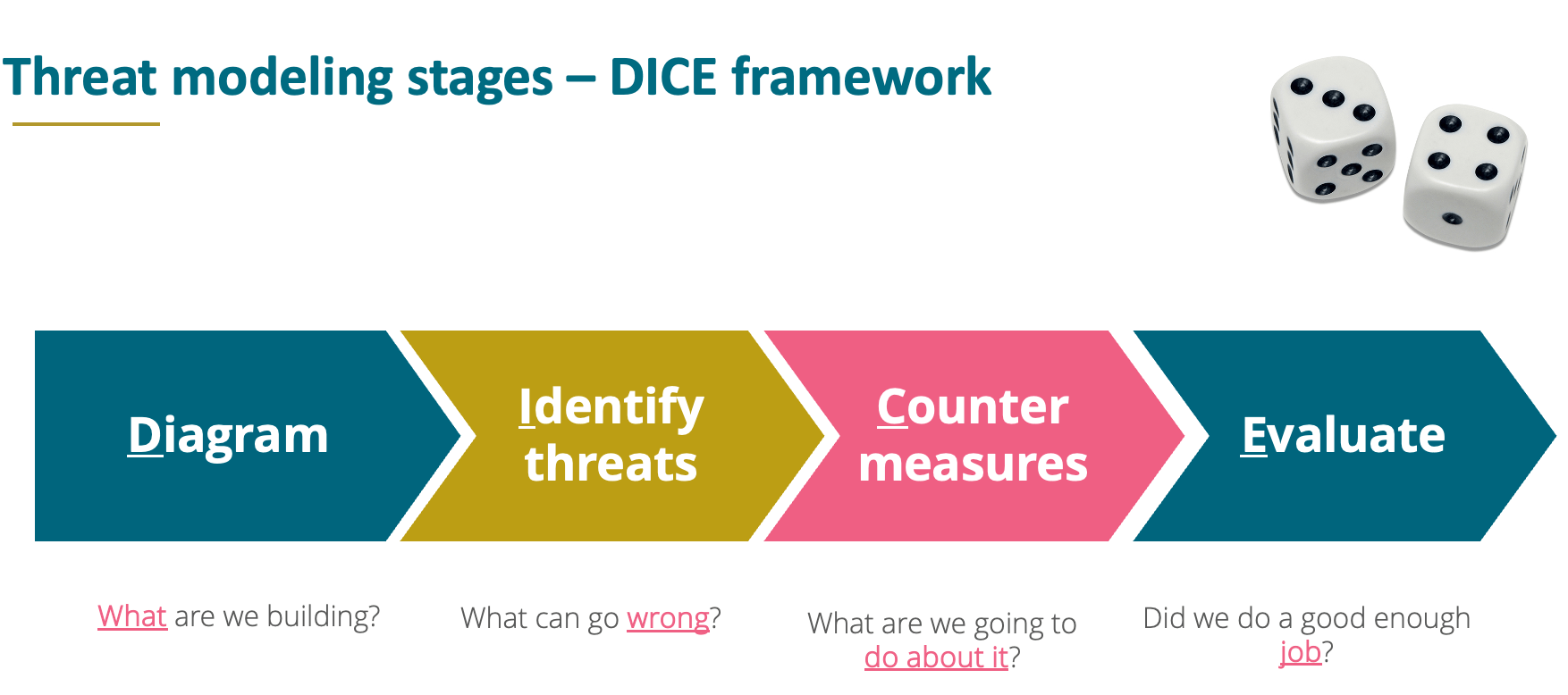
If you’ve done threat modeling, you know the DICE acronym:Diagramming, Identification of threats, Countermeasures, and Evaluation. Where do risk patterns fit in?
- Diagramming (D):
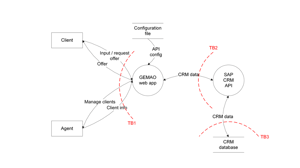
Start by mapping your system’s data flows and trusted boundaries. Risk patterns help you identify where trust levels drop—such as at an internet-facing application programming interface (API)—and where to focus your threat discussions. - Identification of Threats (I):
When you look for threats, risk patterns guide you to scenarios that matter. They remind you, for instance, that any API exposed to the internet might attract malicious actors seeking to exploit it. - Countermeasures (C):
Each risk pattern comes with recommended controls. If your risk pattern suggests that improper access controls are a weakness, the solution might include stricter identity and access management or an automated security event monitoring tool. - Evaluation (E):
Over time, refine your risk pattern library by evaluating what worked and what didn’t. As your business and tech stack evolve, so should your risk patterns.
Armed with a method to integrate risk patterns into DICE, let’s explore how to create and improve your own library of these valuable assets.
Creating and Refining a Risk Pattern Library
Building a solid risk pattern library isn’t just about collecting scenarios—it’s about making them easy to find, update, and apply.
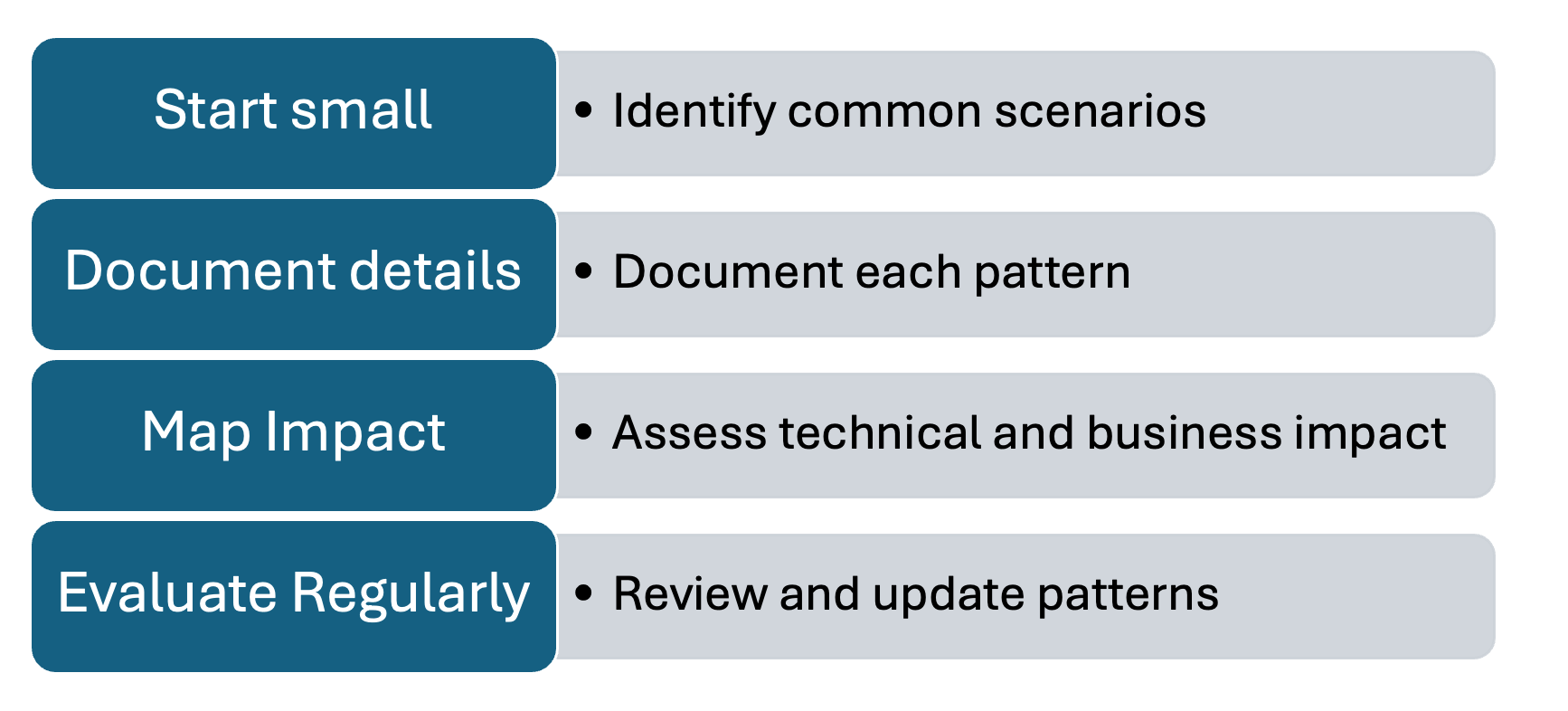
- Start Small: Identify a handful of common scenarios in your domain.
- Document Details: For each pattern, note the attacker profile, the targeted component, likely vulnerabilities, and suggested controls.
- Map Business Impact: Assess not only technical issues but also the business fallout—lost customers, compliance fines, and revenue hits.
- Evaluate Regularly: After each project or post-breach analysis, review risk patterns and successful mitigations, then integrate these lessons learned to enhance your risk pattern assessment models.
This dynamic library becomes your go-to reference, reducing the time it takes to identify risks in new projects. In our Threat Modeling Training at Toreon, we teach you how to build and maintain these libraries so you can continuously improve your security posture.
In fact, this process mirrors the ‘Pattern Cataloging’ capability described in the Threat Modeling Manifesto, where product-specific threats and mitigations are identified, cataloged, and reused. By continuously refining and expanding your risk pattern library with emerging knowledge, you’ll naturally enhance your threat modeling practice over time, ensuring that lessons learned are integrated into subsequent rounds to deliver more accurate, effective insights.
Once you have a set of risk patterns, you can amplify your results by integrating pre-built, generic patterns from trusted sources and tools.
Accelerating Threat Modeling with Pre-Built Patterns
Pre-defined lists of risk patterns from industry tools and platforms can give you a head start. These are especially valuable when dealing with common infrastructures like cloud services or standard web app architectures.
How to Use Pre-Built Patterns:
- Filter & Tailor: Don’t just dump them in—curate which patterns apply to your systems and discard irrelevant ones.
- Enhance Over Time: Add your own insights. If you discover a new vulnerability trend (e.g., a common misconfiguration in an API gateway), turn it into a custom risk pattern for future reference.
- Scale Your Program: As your organization grows, these patterns help ensure every new project team member hits the ground running.
Leveraging curated knowledge sets is a proven way to scale any program effectively. For threat modeling, this means faster, more consistent analyses across multiple teams.
With your risk patterns and frameworks in place, let’s examine how they play out in real-life scenarios and how you can sustain improvement.
Applying Risk Patterns to Real-World Scenarios and Scaling Your Program
Imagine a scenario where a development team must secure a new microservice handling sensitive customer data. Without risk patterns, they might miss a subtle exposure point in a trust boundary between the internal network and an external API. With risk patterns, they quickly identify potential insider threats, injection attacks, or excessive privileges.
Actionable Tips:
- Train Your Team: Ensure everyone involved in threat modeling understands how to apply and update risk patterns.
- Review Periodically: Threat landscapes change—your risk pattern library should keep up with those changes.
- Blend Technical & Business Insights: Always consider both IT vulnerabilities and potential business damage, like customer distrust or legal penalties.
At Toreon, we’ve helped companies understand and apply risk patterns efficiently through our threat modeling training. We equip security and development teams to confidently implement proven methods that align technical risk reduction with business goals.
Conclusion
Risk patterns provide a structured way to pinpoint and address the most relevant threats to your systems. By integrating them into proven frameworks like DICE and maintaining a well-curated library, you not only speed up the threat modeling process but also enhance the depth and relevance of your security decisions.
You’ve seen how risk patterns help focus your team’s attention on truly critical exposure points. They guide you in mapping out trust boundaries, identifying threat actors, selecting countermeasures, and ultimately protecting both your technology and your business bottom line. As your organization grows, these patterns become key to scaling your threat modeling program efficiently and effectively.
Still unsure about where to begin or how to build and refine your own risk pattern library? Our Threat Modeling Training is designed to get you up to speed quickly. We provide hands-on practice, expert guidance, and real-world insights so you can feel confident addressing complex security challenges.
Don’t leave your team guessing—take the next step and start leveraging risk patterns today. Your organization’s security and success depend on it.